Ancient Landmarks on UK Walks: How to Visit Stone Circles, Hillforts and Standing Stones Respectfully
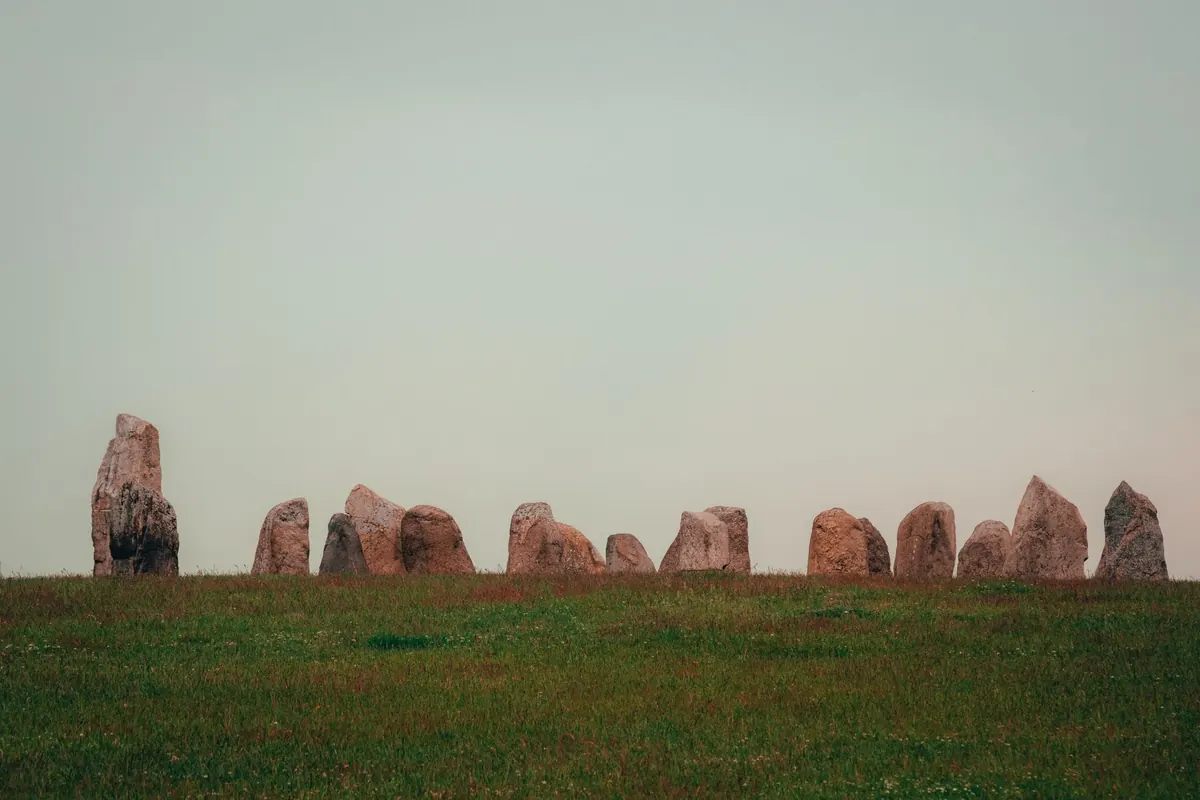
The best approach to a stone circle is rarely the car park. Walk in from a village lane, over a stile, across two fields, and the stones arrive slowly: a smudge of grey on the skyline that firms up into uprights, then a ring. By the time you reach them you have crossed the ground at walking pace, which is how most of these places were built to be met.
Britain is unusually well supplied with ancient monuments, and a good number sit within a short walk of a public footpath. Some are famous — Avebury, Castlerigg, Maiden Castle — and some are a low bank in a wood that takes an hour to find. The etiquette of visiting them changes very little either way.
Stone circles, standing stones and burial cairns belong broadly to the Neolithic and Bronze Age, which in Britain means roughly five thousand to three and a half thousand years ago. Hillforts are much later, mostly Iron Age, with ramparts of earth, rubble or stone. They were defended settlements, working farms, stores and statements of power, and the balance between those roles is still argued over.
Names can mislead. Anything labelled "Druid's" this or "Druid's" that was almost always named by eighteenth- and nineteenth-century antiquarians with a taste for romance; the druids had nothing to do with the stones. A henge is a bank and ditch with the ditch inside the bank, and it need not contain a single upright. What looks like a natural mound on a ridge may be a Bronze Age cairn, protected by law.
Knowing a site's rough period changes what you notice. A hillfort's entrance is worth finding and walking through. A stone circle's relationship to a horizon, a stream or a nearby burial mound often looks deliberate, and the more you look, the more you see.
Try to arrive without a fixed story. The stones at Castlerigg, for example, sit in a natural amphitheatre of fells; at Avebury, the circle wraps around a village and crosses roads, so the monument and everyday life are tangled together. At Arbor Low in the Peak District, the stones lie flat and the bank feels like a raised edge of the world. Each site asks a different question.
Start with a proper map rather than a phone screenshot. The Ordnance Survey 1:25,000 series shows rights of way, access land, field boundaries and often the monument itself as a small black outline. Access land gives a right to roam on foot, but it can be closed for a set number of days each year for land management or shooting, so check before you commit to a route.
On the ground, paths are not always where the map says. Summer growth hides trodden lines across meadows, and a footbridge may turn out to be a plank. Learn to spot waymark discs — usually yellow for footpaths, blue for bridleways — and be willing to backtrack rather than push through a crop or over a fence.
Close every gate behind you unless it is tied open, and use the latch as intended; climbing over a gate damages it and the fence either side. Give cattle and horses plenty of room, and keep dogs on a short lead around livestock. If a field has calves or lambs, take the long way round if you can. On access land, dogs should generally be kept under close control and on a lead between March and July, when ground-nesting birds are vulnerable. Never let a dog worry sheep; it is distressing for the animals and can be a criminal offence.
Ancient monuments have survived for millennia partly because most people have treated them with care. The rules are simple, but they matter.
Visit as if the stones will still be there in another thousand years — because with care, they will.
Hillforts reward a slow circuit. Walk the outside first. Notice how the ramparts use the natural slope, where ditches deepen, and how many lines of defence there are. Old Oswestry in Shropshire and Maiden Castle in Dorset are masterclasses in this: their entrances are complex, staggered and designed to make approach awkward. Then go in through the original entrance if you can, rather than a later gap. Feel how the ground pulls you uphill, how the view opens, and how the interior suddenly becomes a sheltered bowl.
Inside, look for platforms, hollows and low banks. These may be house stances, storage pits, quarries or later rabbit warrens. Do not assume a hillfort was only a fort. Many were busy places: markets, workshops, cattle pens, symbols of belonging. A hillfort on a walking route is not a ruin to tick off but a piece of a working prehistoric landscape.
Winter is often the best time to see earthworks. Low sun rakes across the ground and every bank and ditch casts a shadow. Summer is better for long walks and wildflowers, but dry ground can be hard and busy sites can feel crowded. In wet weather, stay off saturated paths where possible; erosion caused by a single muddy afternoon can take years to heal.
Sunrise and sunset are popular at stone circles, especially around the solstices and equinoxes. If you go then, expect other people, including those with spiritual intentions. At Stonehenge, access is carefully managed by English Heritage; at Avebury, the village and roads remain in use, so park considerately and do not block driveways or field gates. Check local notices for temporary closures, lambing, shooting or conservation work.
Many of these sites are scheduled monuments. In England, Wales and Scotland, scheduling gives legal protection to the monument and its setting; in Northern Ireland, similar protection exists under historic monuments legislation. It is an offence to damage a scheduled monument, and to use a metal detector on one without permission. That is not red tape for its own sake. A single hole can destroy the context that gives an object its meaning.
Access rights vary. In England and Wales, the Countryside and Rights of Way Act 2000 opens much access land, but not all monuments stand on it. In Scotland, the Land Reform (Scotland) Act 2003 gives broader rights of responsible access, but they still come with responsibilities. Always use gates, stiles and paths as signed, and if a site is on private land with no public access, admire it from the right of way and do not climb a fence to get closer.
You can turn a good walk into something more useful. Local archaeology societies, national park volunteers and organisations such as the National Trust, Historic England, Cadw, Historic Environment Scotland and the Northern Ireland Environment Agency often need help with survey, footpath repair or visitor monitoring. Recording a photograph, a condition note or a grid reference through a citizen-science project can help protect a site you love.
And if you find something — a flint, a fragment of pottery, a curious earthwork — leave it where it is, note the location, and report it to the relevant historic environment record. The best contribution is often the one that stays in the ground.
Walk in slowly, look longer than you meant to, and leave the place as you found it. That is the whole etiquette, and it works from Avebury to a low bank in a wood.
Photo: Philipp Deus / Pexels
How to walk through British villages and farmland without causing offence: gates, livestock, driveways, rights of...
A first-timer's guide to the South West Coast Path: reading tides, staying safe near cliff edges, judging distances...

A practical guide to minimising your impact on the British countryside, covering path use, waste, wildlife...


Exploring paths, places, and stories of rural Britain..
